





News
Ultra-low Frequency Dielectric Loss Tester Revolutionises Cable Testing Technology
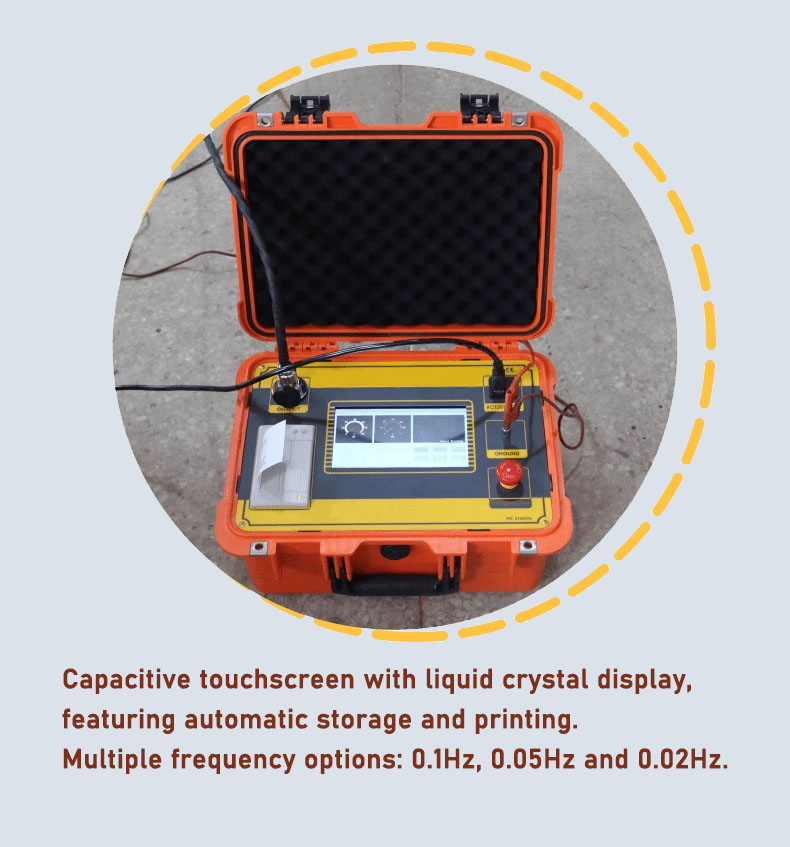
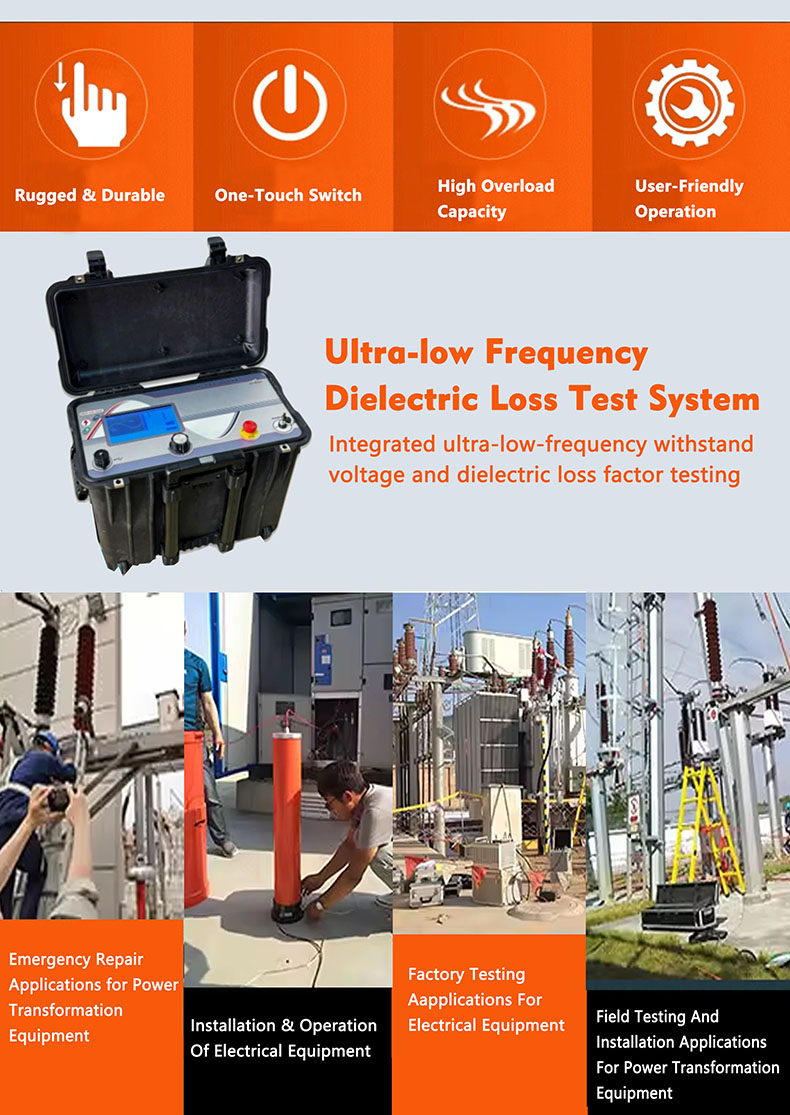
This system strictly adheres to the HD 620 S1:1996 and HD 621 S1:1996 standards, employing a 0.1Hz ultra-low-frequency sinusoidal voltage to achieve three detection modes: DC withstand voltage testing precisely measures insulation breakdown strength; rectangular wave voltage automatically adapts to the cable's capacitive characteristics with real-time optimisation of conversion rates; while the dielectric loss factor test directly quantifies the degradation level of the cable insulation material, enabling prediction of potential faults through the loss factor variation curve.
【Multi-scenario Application Value】
In polyethylene/cross-linked polyethylene (XLPE) cable inspections, the system penetrates insulation layers to detect early signs of water tree damage. For conventional paper-insulated cables, its non-destructive testing capability ensures zero damage to fault-free insulation. Notably, the system supports bidirectional DC voltage testing, complemented by real-time leakage current monitoring, establishing a comprehensive evaluation framework spanning insulation strength to dielectric loss.
【Intelligent Operational Features】
The equipment incorporates a dual-mode manual/automatic frequency adjustment system. It automatically disconnects the high-voltage circuit upon voltage breakdown to ensure operational safety. Test data is stored in real-time within the built-in memory, supporting one-click export to a USB drive for generating standardised test reports. Firmware upgrades can be swiftly completed via the USB interface, ensuring the equipment consistently meets the latest international standards.
【Significance of Industry Innovation】
Compared to conventional testing methods, this ultra-low frequency dielectric loss tester achieves a breakthrough by enabling sheath testing and precise fault location, supporting sheath detection up to 10kV. Its trapezoidal AC voltage output mode automatically adjusts according to cable capacitance, ensuring test parameters closely match actual operating conditions and significantly enhancing the reliability of test results.